Premium LASIK from €1,000 per eye

Invest in your freedom – instead of new glasses.

Say goodbye to foggy glasses and dry contact lenses. Enjoy true freedom with state-of-the-art LASIK technology. Personally treated by Dr. Steinhorst: precise, gentle, and in just a few seconds.

Benefits of LASIK treatment

Short operation time of only 60 seconds

Long-term and permanent vision correction

Fast recovery and minimal downtime

NASA-tested for precise results

millions of successful operations worldwide

No need for glasses or contact lenses

Anesthetic drops instead of an injection, only light pressure

possibility of subsequent correction

Requirements for successful LASIK

  • The prescription should have been stable for at least 1 year.
  • The minimum age is 18 years.
  • There should be no progressive retinal diseases
    present.
  • No procedure should be performed during pregnancy or breastfeeding.

LASIK: What does the term mean?

LASIK (laser in situ keratomileusis) is a laser eye procedure used to correct vision problems. It uses an excimer laser to change the shape of the cornea. The goal is to adjust the eye so that light rays are focused precisely on the retina, resulting in clear vision. LASIK is the popular choice for people who want to reduce their dependence on glasses or contact lenses. The treatment is usually quick, recovery time is short, and it offers a permanent solution to various types of vision problems.

What can be corrected with the LASIK procedure?

The LASIK procedure is an effective method for correcting various visual impairments, but with certain limitations:

Nearsightedness (myopia): LASIK can be successful for myopia up to -10 diopters (dpt).

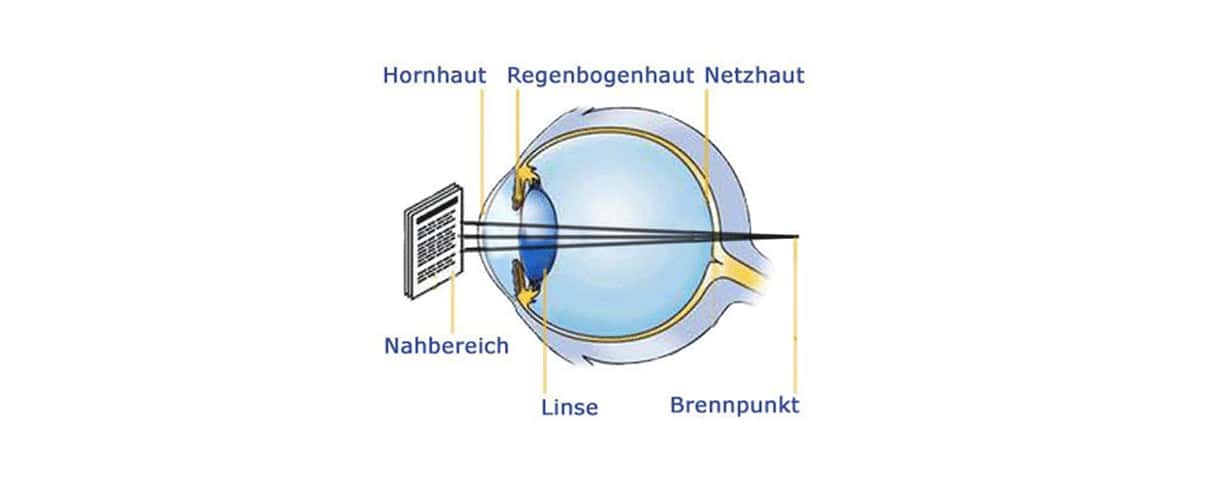
Farsightedness (hyperopia): In cases of hyperopia, LASIK can be effective up to a degree of +4 dpt.

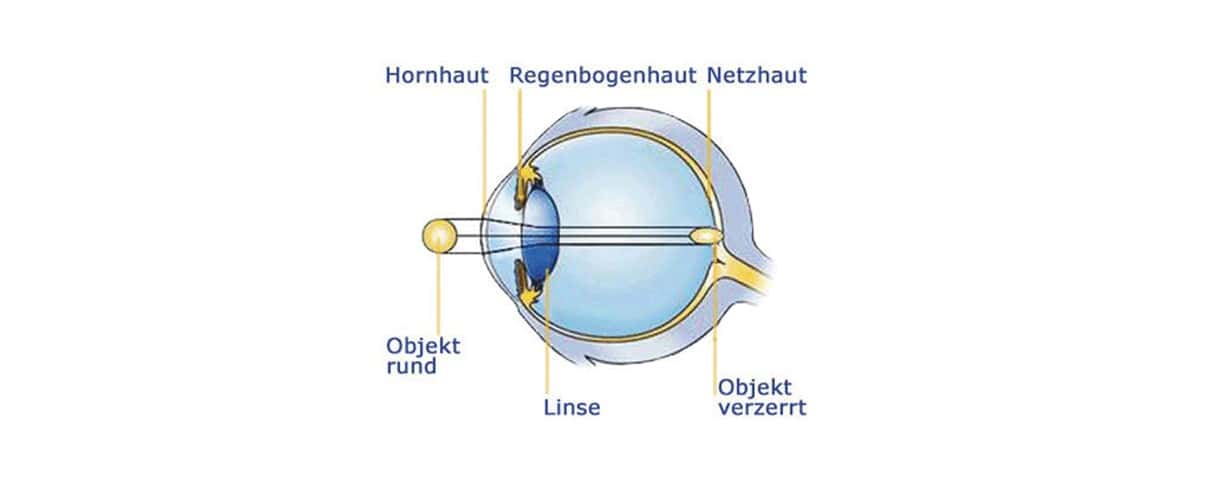
Astigmatism (curvature of the cornea): LASIK can correct astigmatism up to 6 dpt.

It is important to note that an individual's suitability for LASIK treatment depends on other factors, such as the thickness and shape of the cornea, the specific degree of visual impairment, and overall eye health. An ophthalmologist can determine whether LASIK is the right treatment for an individual through a comprehensive examination using appropriate diagnostic equipment.

5 advantages of the LASIK procedure

1. Short treatment under local anesthesia

The procedure only takes a few minutes, and numbing eye drops make it quite bearable.

2. Outpatient implementation

LASIK is usually performed on an outpatient basis, meaning you can go home immediately after the operation.

3. Rapid improvement of vision

You will have good vision after just a few hours. You can largely resume your normal daily life the next day.

4. Gentle and fast healing process

The natural structure of the superficial corneal layers is preserved and the healing process is without complications.

5. Reliable and recognized worldwide

Through LASIK treatment, more than 17 million people worldwide have been operated on with outstanding treatment results and have successfully freed themselves from glasses and contact lenses. This method is considered reliable worldwide and enables an improved quality of life through clear and independent vision.

Alternatives to LASIK

The Trans-PRK and Femto-LASIK Both are advanced alternatives to the classic LASIK method. Trans-PRK (transepithelial photorefractive keratectomy) is a non-contact procedure in which the top layer of the cornea is removed with a laser, ideal for patients with thinner corneas. Femto-LASIK, on the other hand, uses a femtosecond laser to create a precise corneal flap and offers rapid healing as well as high precision, particularly suitable for complex refractive errors. Both methods offer innovative, proven alternatives for individualized vision correction.

How does LASIK work?

Step 1: Preparation of the corneal disk (flap)
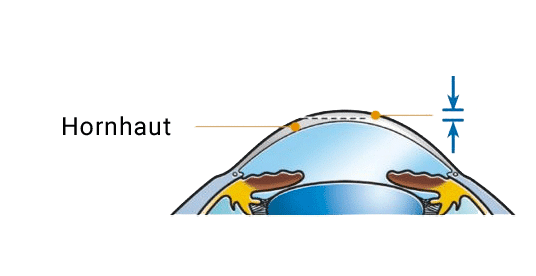
First, a thin slice of cornea, approximately 0.12 mm thick, is prepared using computer control. This process is performed with extreme precision to ensure exact control over the thickness and shape of the flap. The flap can be prepared using a keratome or with an additional laser, the femtosecond laser.

Step 2: Laser treatment of the cornea
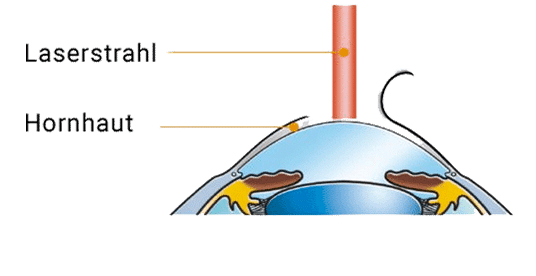
After preparation, the corneal disc is carefully folded back like a book cover. This allows access to the underlying deeper layer of the cornea, which is responsible for correcting vision. The corneal layer is then precisely modeled using a specialized laser. The laser specifically removes corneal tissue in order to change the curvature of the cornea according to the necessary vision correction.

Step 3: Fold back the flap
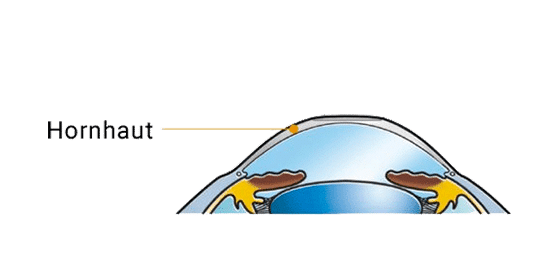
After the laser treatment, the corneal disc is folded back into its original position. It adheres itself and serves as the body's own plaster, protecting the treated area and supporting the healing process.

My surgery day: This is how your LASIK operation will proceed.

Your LASIK day at LZW

Preparation and first hours: The weeks after the procedure

era


Please arrive at our laser center on time, ideally 15 minutes before your appointment. If you wish, you can receive a sedative and a pain reliever beforehand. Your eye will be numbed with drops only; there will be no injection. The drops are effective, and the laser treatment itself is well-tolerated by most patients. Afterward, your eye will feel as if there's a grain of sand in it for a few hours: it will itch, water, and your vision will be blurry. This will subside after two to three hours.

How much time should I allow?

The laser treatment itself only takes a few minutes. Including the pre- and post-treatment examinations, please allow approximately one to one and a half hours in total. Immediately afterward, you can relax in our quiet recovery room.

Important for the first few days:

Most patients see almost as clearly as they desired just one day after LASIK. For the first few nights, we will provide you with special plastic eye shields to protect your eyes while you sleep. We also include several eye drops, which you should use exactly according to our drop schedule during the first week. If you experience severe pain or if your vision suddenly worsens, please call us immediately.

The weeks following the procedure

Your vision may fluctuate slightly during the first few weeks. After three to four weeks, the result will have stabilized and remain consistent.

A simple rule: The smaller your refractive error before the procedure, the better the chances of being able to see clearly without distance glasses afterward. And even if everything goes perfectly and you no longer need distance glasses: Around the age of 50, you'll likely need reading glasses. This applies to people with normal vision at this age as well.

Minimize stress:

  • Do not rub or press on the eye
  • Wear a sleep mask at night for a week
  • No heavy physical activity (>20 kg) for 2 weeks
  • Avoid swimming, sauna and gardening for 2 weeks
  • TV and screen work possible after 1-2 days, with breaks
  • Protect your eyes from bright light and sun (wear sunglasses for 2 weeks)

Eye drops:

  • Application according to plan (drip scheme)
  • Use artificial tears regularly for 3-6 months

Washing hair & applying make-up:

  • Generally allowed, but make sure that no water, soap or shampoo gets into the eyes during the first week
  • Powder/eye shadow is allowed 3 days after surgery
  • No waterproof makeup for 2 weeks

Sport:

  • Light sports (jogging, Pilates) after 1 week
  • Weight training after 14 days, swimming and sauna after 2 weeks with protective goggles
Man with distracting glasses working on his laptop

The way to life without glasses with LASIK

Femto-LASIK is considered the gold standard in refractive eye surgery and is known for its exceptional precision in correcting refractive errors such as nearsightedness, farsightedness and astigmatism. This method enables a correction accuracy of up to 1/100 diopter. This method combines the advantages of LASIK with the advanced technology of the femtosecond laser, which enables a tailor-made, precise treatment for each individual eye.

As an experienced chief physician at the LZW and expert in Femto-LASIK, Beate Steinhorst will be happy to advise you comprehensively on this topic.

LASIK at LZW: fast, gentle, precise

You are currently viewing a placeholder content of YouTube. To access the actual content, click on the button below. Please note that this involves sharing data with third parties.

More information

LASIK opens the door to a new lease on life: finally free from glasses and contact lenses. The procedure only takes a few minutes, and numbing drops make it easily tolerable.

Anyone who wears glasses or contact lenses knows the minor inconveniences in everyday life: In some professions, corrective lenses are prohibited for safety reasons, and during sports, for example at the swimming pool, they are simply a hindrance. Contact lens wearers struggle with dry eyes in air-conditioned rooms, and glasses wearers get headaches if the frames don't fit properly. And a lost lens or broken glasses is simply annoying for everyone.

LASIK provides a solution precisely in this situation. It is one of the best-known and most proven procedures for correcting visual impairments such as nearsightedness or farsightedness: Millions of people worldwide have already opted for it.

Overview of visual impairments

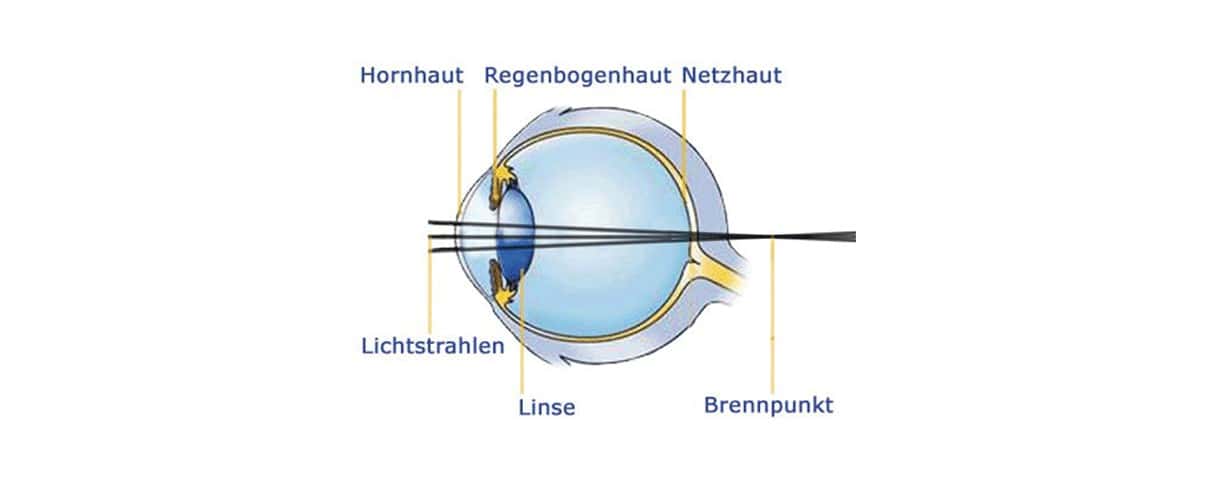
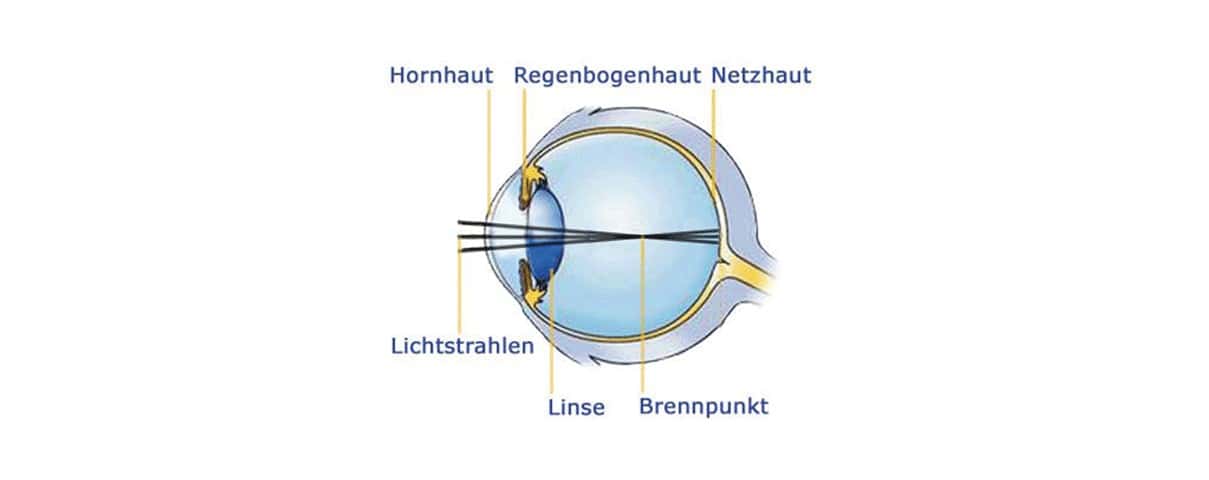
A refractive error means that the light rays entering the eye do not converge at a single focal point on the retina, as they do in a normally sighted eye. The image becomes blurry or distorted because, usually, the eye's length and the curvature of the cornea do not match. Imagine the eye like a camera: the cornea and lens are the objective, and the retina is the film.

The cost of LASIK treatment

At LZW, LASIK surgery costs from €1,000 per eye, depending on the procedure. This price, along with all pre- and post-operative examinations, is based on the current German fee schedule for physicians (GOÄ). Why do the costs vary? Because every eye is different: A thin cornea or increased glare sensitivity due to higher-order aberrations requires a different LASIK procedure than a straightforward case. Financing is available.

Do you have a specific question that you would prefer to clarify in writing? You can reach our patient team directly here.

reimbursement of costs by statutory health insurance companies

Statutory health insurance companies do not cover the costs of LASIK.

What private health insurance covers

Those with private health insurance are in a good position: Private health insurance companies cover LASIK surgery in full or in part. Check with your insurance company beforehand to find out the exact terms and conditions, and submit a cost estimate if needed. We would be happy to prepare one for you.

A court ruling that helps privately insured people

The Dortmund Regional Court has ruled (case number 2 S 17/05): Private health insurance companies must bear the costs of laser eye surgery.

The judges reasoned that laser eye surgery is a scientifically recognized treatment method that can achieve better results than simply correcting visual impairment with glasses or contact lenses. According to the court, corrective lenses only alleviate the symptoms, while laser surgery addresses the root cause of the vision problem.

This confirms that laser eye surgery is indeed considered a medically necessary treatment. Good news for those with private health insurance, as it is mandatory for them to cover the costs. If you are a privately insured patient planning laser eye surgery, it is best to contact your insurance company beforehand.

Tax advantage: Your eye surgery in your tax return

You can claim the costs of laser eye surgery as an extraordinary expense in your income tax return.

The easiest way: Secure your free consultation appointment now or attend one of our free information evenings. All information is available at [website address]. Tel. 0611-360 220

Eye surgeries:
Which procedure is right for you?

Are you ready to free yourself from the limitations of glasses or contact lenses? Discover the variety of lens procedures and options that fit your lifestyle with our test. Learn more about customized solutions for your eyes.

In just 2 minutes!

Finally glasses-free: This is how our happy patients experience it.

We are proud: With 4.8 stars based on 97 Google reviews (as of October 2026), we are Wiesbaden's highest-rated laser eye clinic. This is backed by the genuine experiences and outstanding results of our patients. We will walk this path with you, step by step, until you can live a life without glasses.

Does laser treatment hurt?

No. Before the procedure, we will numb your eye several times with drops (local anesthetic). Most people only feel slight pressure.

Should I expect pain afterwards?

After LASIK, the eye may feel slightly itchy for the first few hours. Initially, this is accompanied by light sensitivity and tearing, both of which usually subside after two to four hours. PRK and LASEK are different: Here, pain can occur until the corneal epithelium, the outermost layer of the cornea, has healed. During this time, a contact lens rests on the cornea for two to three days, acting like a transparent bandage, and a slight itching or pressure sensation may be felt. Regular use of artificial tears provides relief.

How much time does the treatment take?

Our lasers work with high precision and lightning speed: The actual laser treatment only takes seconds! For both eyes together, you can expect a treatment time of approximately 15 minutes.

How long do the results of LASIK laser eye treatment last?

The results of LASIK are mostly permanent and successful. Studies show that about 96% of patients are satisfied with their LASIK treatment. In the majority of cases, vision remains stable and patients enjoy improved visual acuity over the long term. However, it is possible that some people, particularly those with severe initial refractive error, may require follow-up treatment over time. It is important to note that LASIK does not protect against age-related vision changes such as presbyopia, which typically begin after age 45.

When can I drive, exercise or work again after surgery?

After laser eye surgery, most patients can:
drive a car: After just 1 to 2 days, once visual acuity has stabilized.
Work: Return to work is usually possible after 1-2 days, although the use of eye drops for follow-up treatment during work is important.
to do sports: Sports activities can usually be resumed 1-2 days after treatment. However, direct contact with the cornea and vigorous rubbing of the eyes should be avoided in order not to endanger healing. These times can vary depending on the individual healing process and type of treatment.

How successful are LASIK, Femto-LASIK and Trans-PRK?

Worldwide statistics show that around 97% of patients can see clearly at a distance without glasses or contact lenses after treatment. However, the outcome depends on the surgeon. Besides the doctor's experience, the clinic's technology is crucial. At the LZW, we work with one of the most advanced laser technologies in the world.

How sharp will my vision be after laser surgery?

In the first few hours, vision may be slightly blurred, but this gradually decreases. On the first day after treatment, most patients achieve 80% to 100% visual acuity. In the first few months, vision may be subject to slight daily fluctuations, but these become increasingly less frequent.

What are the risks of laser eye surgery?

No surgery is without risk. With laser eye surgery, the risk is less than 1%, which is very low. We often hear about the fear of blindness, so let's be completely transparent: blindness originates in the back of the eye, and the laser does not touch that area. It works only on the cornea, removing tissue in the micrometer range. We will discuss your individual risks honestly during your consultation.

Request an individual initial consultation now:

Request an individual initial consultation now:

Location
Friedrichstrasse 34, 65185 Wiesbaden

E-mail
info@lzw-wiesbaden.de

Opening hours
Mon. & Wed. – 8:00 a.m. – 7:00 p.m.
Tue. & Thurs. – 8:00 a.m. – 6:00 p.m.
Fri. – 8:00 a.m. – 5:00 p.m.
Saturday by appointment!