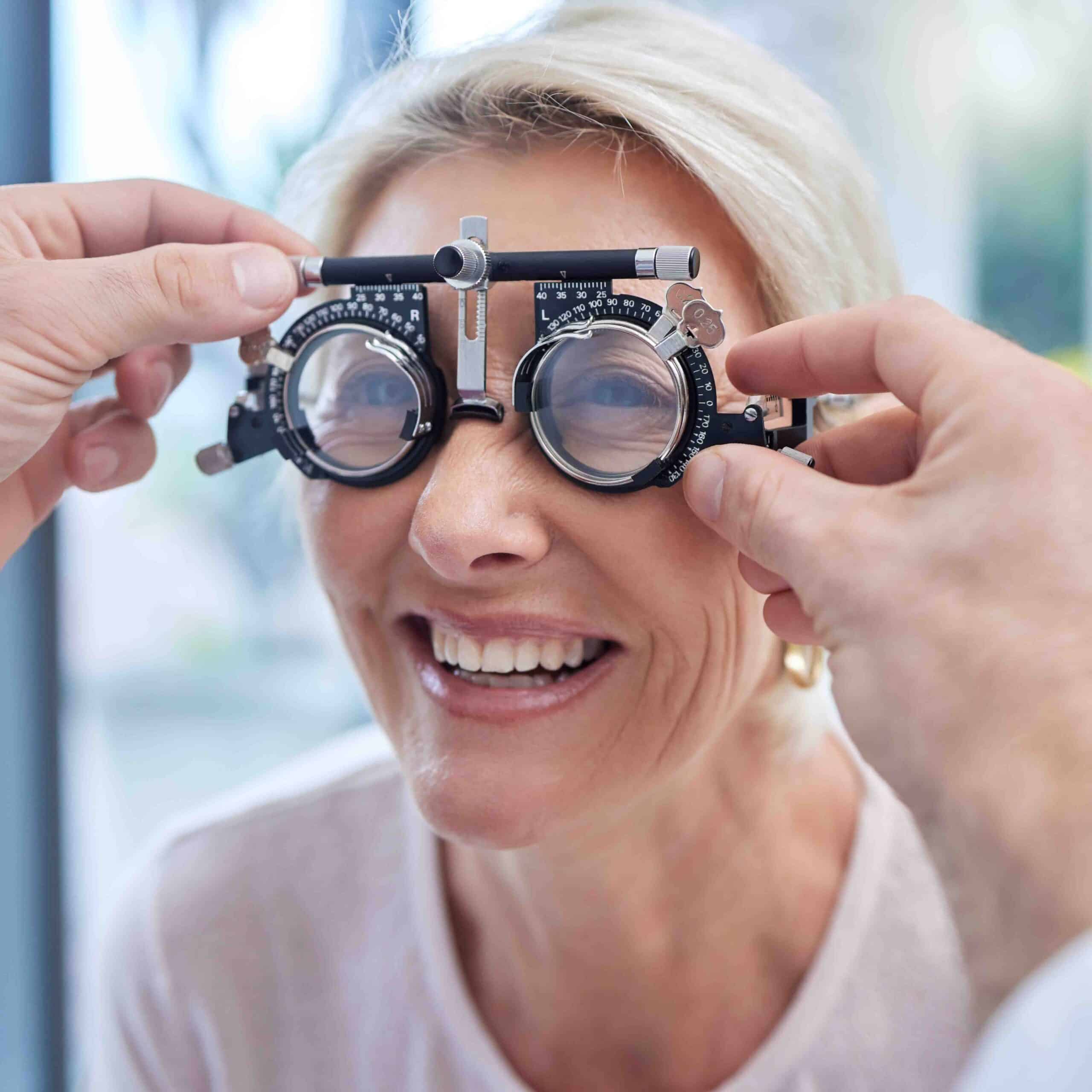
eye surgery specialists
Premium lenses: vision correction through lens surgery
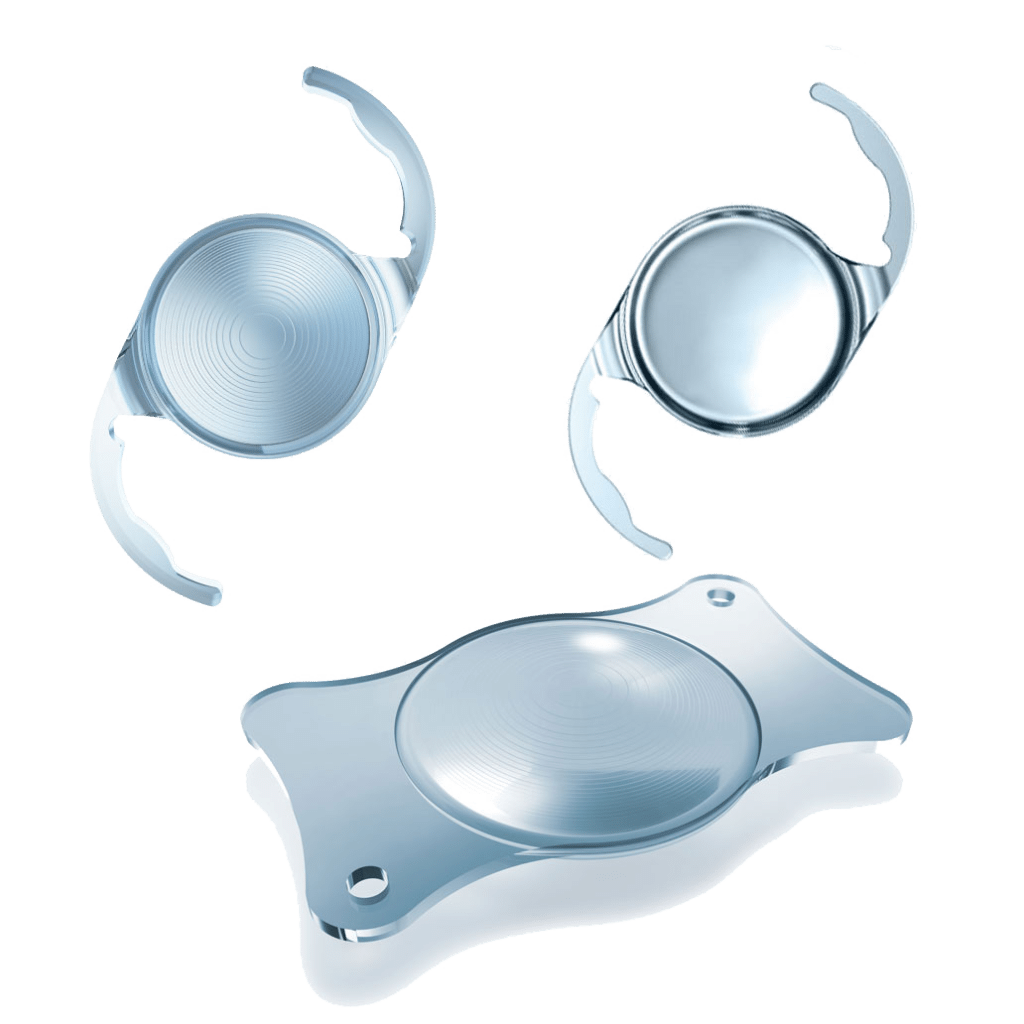
Severe farsightedness or severe nearsightedness? This is precisely where intraocular lenses demonstrate their strength. During lens replacement surgery, we correct your refractive error with an artificial lens, making the dream of a life without glasses or contact lenses a reality. Intraocular lenses are high-quality artificial lenses that either replace your natural lens or supplement it within the eye. For us, two things are inextricably linked: a thorough preliminary examination and honest consultation. At LZW, you will learn about all the advantages, and we will discuss potential side effects just as openly.
Chief Physician Dr. med. Beate Steinhorst on the topic of refractive surgery
You are currently viewing a placeholder content of YouTube. To access the actual content, click on the button below. Please note that this involves sharing data with third parties.
More information- Glasses-free, for a lifetime: That's what premium lenses are made for.
- State-of-the-art diagnostics to ensure your lens fits your eye perfectly.
- surgical preparation
- Our chief physician personally performs every operation.
- Only ZEISS premium lenses: Quality from the world market leader
- Short-term anesthesia upon request: You sleep peacefully while we operate.
State-of-the-art lens surgery, exclusively at our private clinic
The right lens procedure is an excellent alternative to laser treatment. We offer a variety of customized methods and lenses perfectly tailored to your needs to ensure your optimal vision quality.
Our goal: A life without glasses or contact lenses through individually adapted, state-of-the-art treatments.
Refractive Lens Exchange (CLE)
Refractive lens exchange is a procedure in which the eye's natural lens is replaced to correct diopters.
This procedure is often recommended for people over 45 whose natural lens is losing flexibility and who therefore have problems with near vision. It is also an option for younger people who are not suitable for laser procedures or implantable contact lenses (ICLs).
Different types of IOLs can be used, the most common being multifocal lenses, which allow objects to be seen clearly at all distances – similar to progressive lenses.
add-on lenses
Add-on lenses are IOLs that are placed in the eye in addition to the artificial lens that has already been implanted. They are used to further improve the quality of vision or to meet specific visual requirements (e.g. near vision).
These lenses can be inserted, replaced or removed later to optimally adjust vision. They are particularly suitable for patients who need fine-tuning of their vision after cataract surgery or other eye surgery.
Implantable contact lenses (ICL)
How much does your premium lens cost? That depends on the extent of the procedure: Which lens type suits your eyes and your daily life? Local anesthesia or general anesthesia? And how complex is the surgery?
After your personal consultation, you will receive a customized offer: all services listed, complete planning security, and no hidden costs afterward. For reference, lens replacement surgery with premium lenses starts at €2,000 per eye at LZW. If you are paying for it yourself, we are happy to offer financing options, similar to our laser eye surgery. Just ask us.
quality standards with premium lenses from ZEISS
We rely on Zeiss premium lenses – a synonym for quality and precision in ophthalmology. As the world market leader, Zeiss lenses offer unparalleled clarity and visual acuity, providing our patients with optimal vision and an improved quality of life. Choose the LZW for the highest standards in your lens treatment, supported by leading Zeiss technology.
Get detailed advice from our chief physician and find the right premium lenses for your eyes.
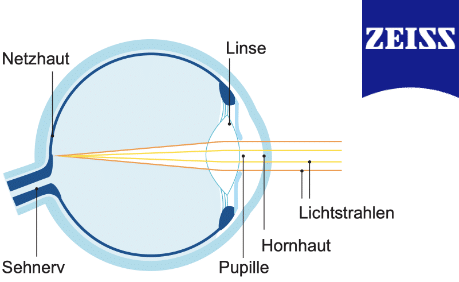
Premium lenses are standard for us Lens Types & Methods
In contrast to the past, when artificial lenses were only used for cataracts, lens operations have become much more important today. In particular, due to the availability of multifocal lenses, which are better than progressive lenses and enable clear vision in the distance and in various close-up areas, including overhead, with a completely natural head position and without "zone reduction". We have specialized in this at the LZW and only use premium lenses (e.g. Zeiss).
However, individual advice from an ophthalmologist is essential for selecting the right lens.
- Multifocal lenses
- Monofocal lenses
- EDOF lenses
- Aspherical lenses
- Toric lenses
Multifocal intraocular lenses (MIOLs) represent a common solution to open up a visible world to those affected without the need for visual aids. Such lenses enable wearers to clearly see objects at all distances - whether close, in between or far away - without the support of glasses. MIOLs are particularly advantageous for individuals who value independence from glasses in their daily lives. Due to their special nature, halo effects around light sources can occur after implantation, especially in poorly lit environments. However, users usually quickly get used to this side effect.
TRIFOCAL intraocular lenses for good vision without glasses _ pdf
Monofocal lenses have a defined quality of vision at a specific distance, usually optimized for distance vision.
Advantages: Provide the best contrast and a clear, stable vision (usually) for distance. Easy and reliable to use.
Application: Ideal for patients who prefer clear vision at a specific distance without the complexity of multifocal lenses. Typically requires glasses for near or other viewing distances.
EDOF lenses are a modern solution in the field of ophthalmology that offer a continuous focal length over different distances. They differ from traditional multifocal lenses in their design, which allows for significant visual acuity over a wider range of distances. Ideal for patients seeking improved vision quality over different distances, especially for those with high demands on night vision, such as drivers.
Advantages:
- Provide clear vision for normal print size up to close, making them practical for everyday visual tasks such as reading.
- Improved night vision compared to traditional multifocal lenses, making them beneficial for people who drive at night or frequently work in low light conditions.
EDOF intraocular lenses for excellent vision for an active lifestyle _ pdf
Aspheric lenses represent an advancement in monofocal IOL technology by utilizing a special geometry that flattens from the inside out. This advanced design sets them apart from standard lenses.
ASPHERICAL monofocal lenses for good vision in all lighting conditions _ pdf
Toric lenses, which are used in all types of lenses, correct visual acuity caused by a non-spherical cornea (astigmatism).
TORIC intraocular lenses for precise astigmatism correction _ pdf
Eye surgeries:
Which procedure is right for you?
Are you ready to free yourself from the limitations of glasses or contact lenses? Discover the variety of lens procedures and options that fit your lifestyle with our test. Learn more about customized solutions for your eyes.
Glasses-free in old age through the use of premium lenses for cataracts
At LZW, we offer effective outpatient treatment under local anesthesia for cataracts, an age-related clouding of the eye's lens. Our diverse range of lens models enables clear vision at all distances – from near to far.
Dr. Steinhorst, our experienced chief physician, personally replaces the clouded lens with a high-quality premium lens implant. This operation not only enables complete healing of the cataract, but also excellent visual acuity without additional glasses.